


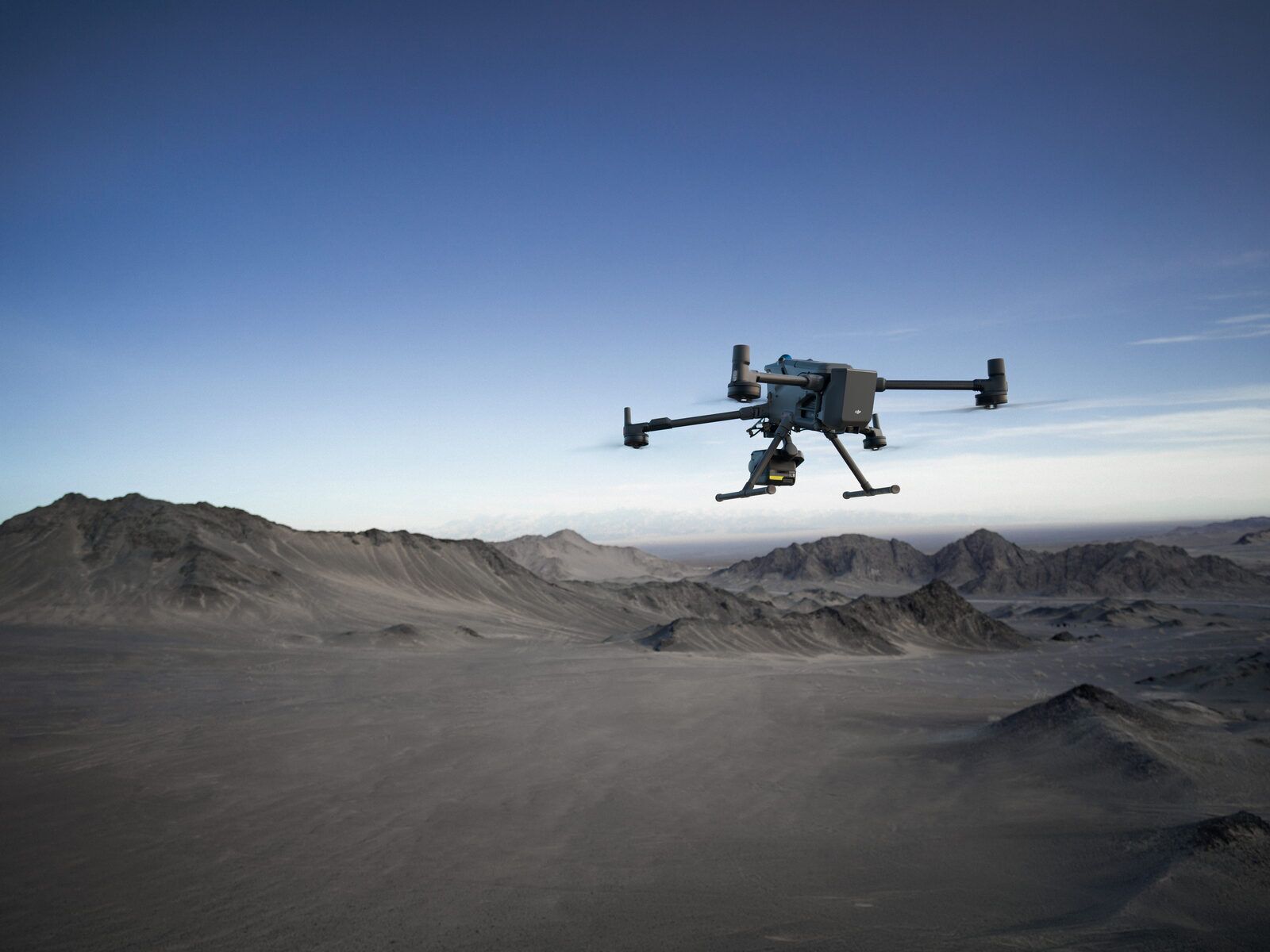

DJI AP100 – Parachute for DJI Matrice 400
€ 1.189,09

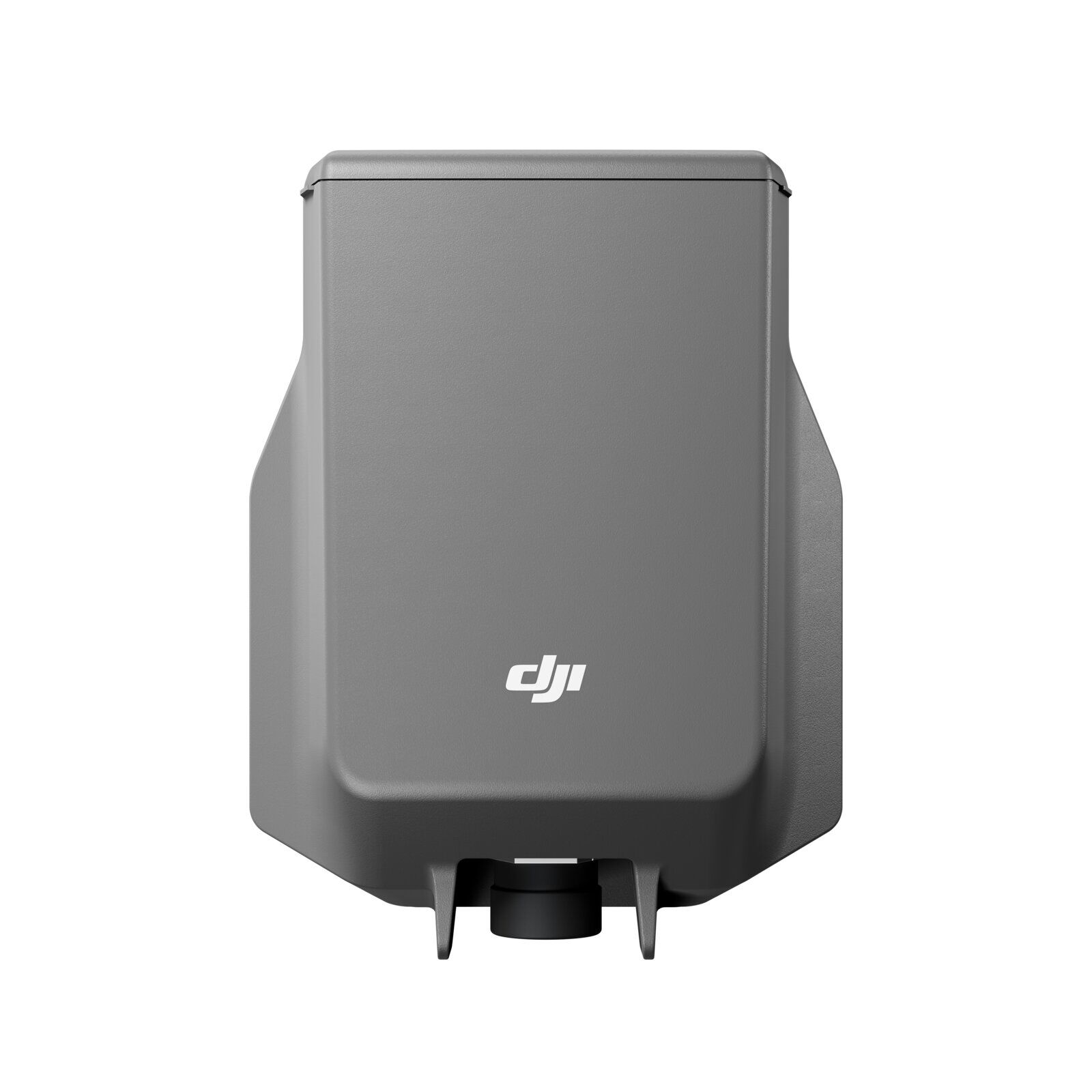
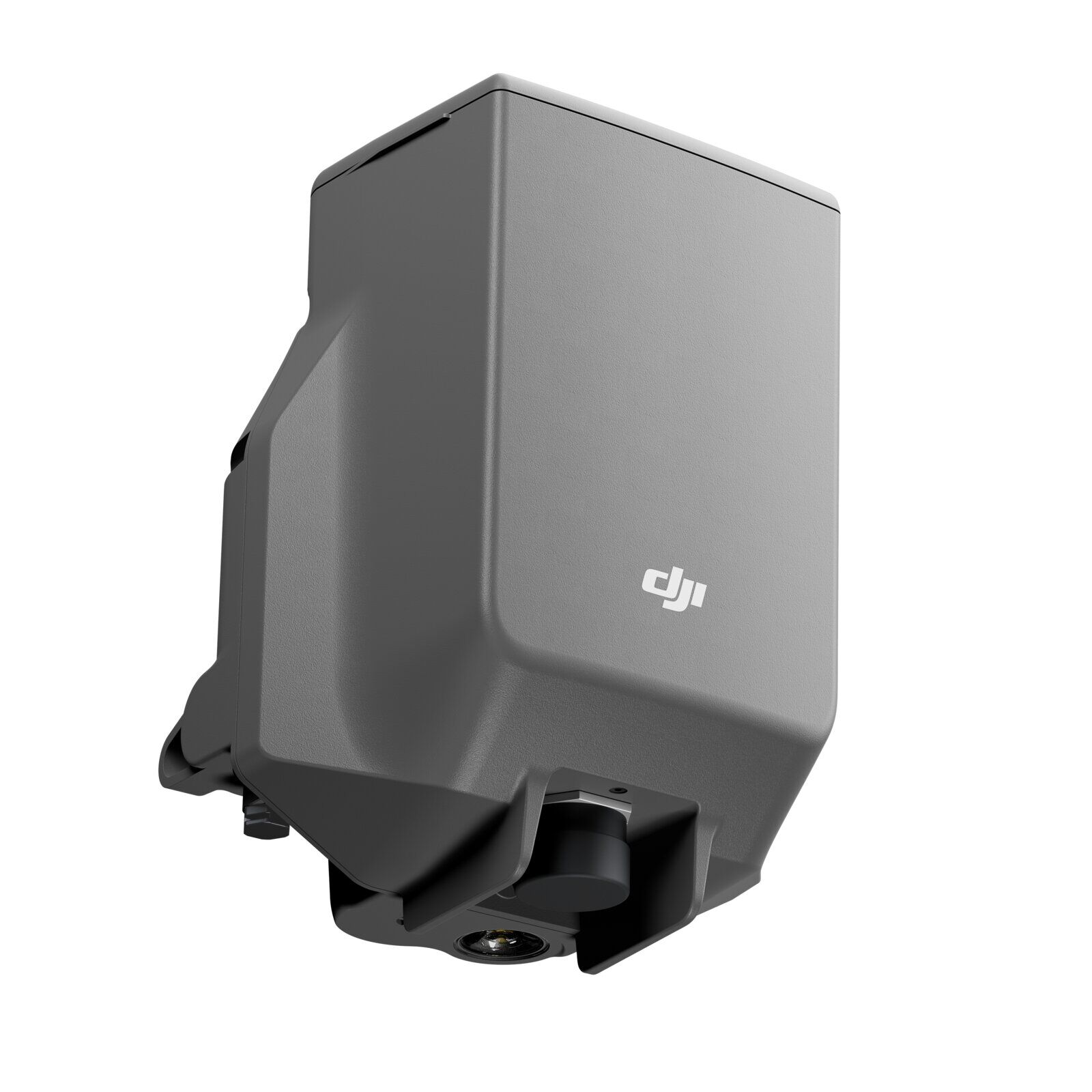
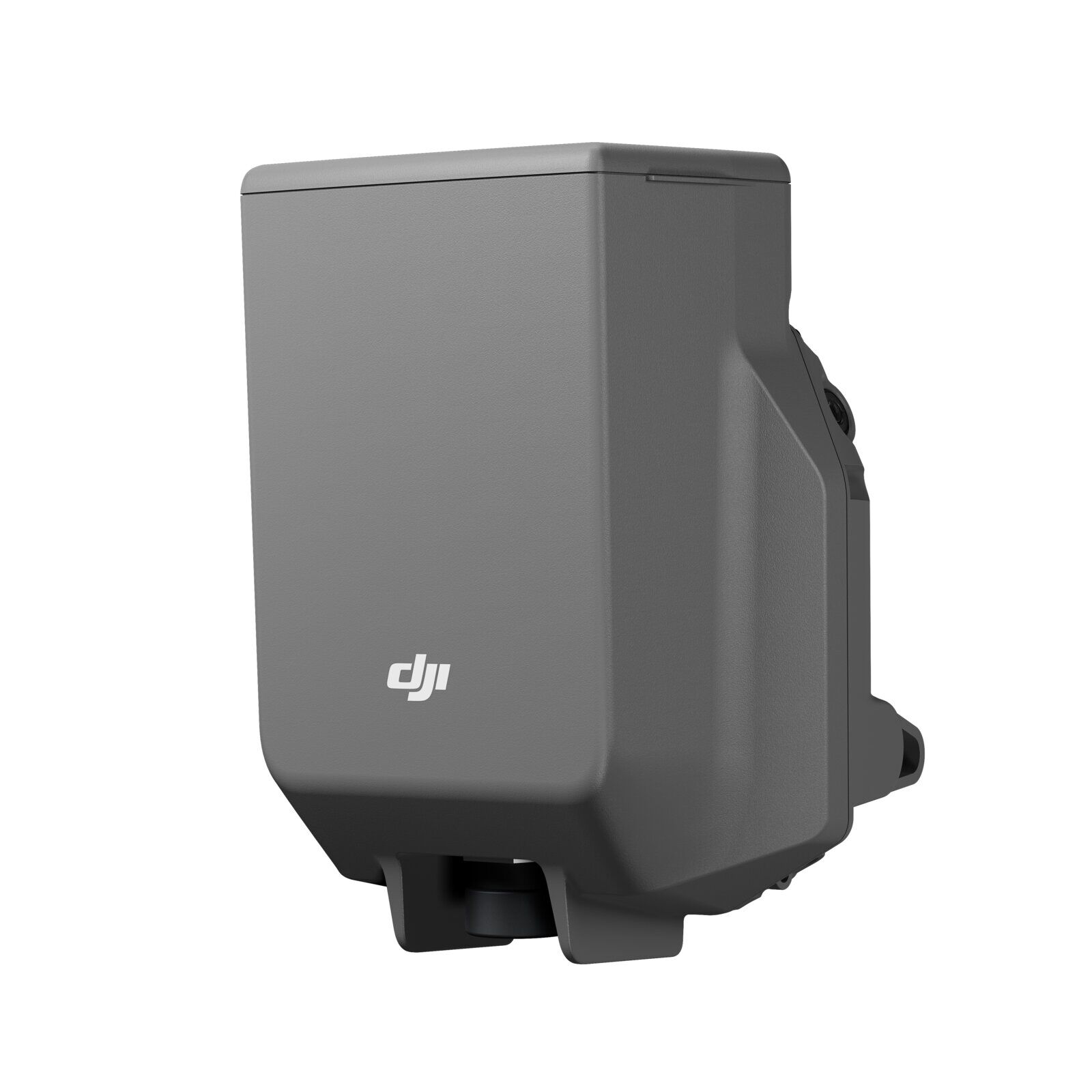
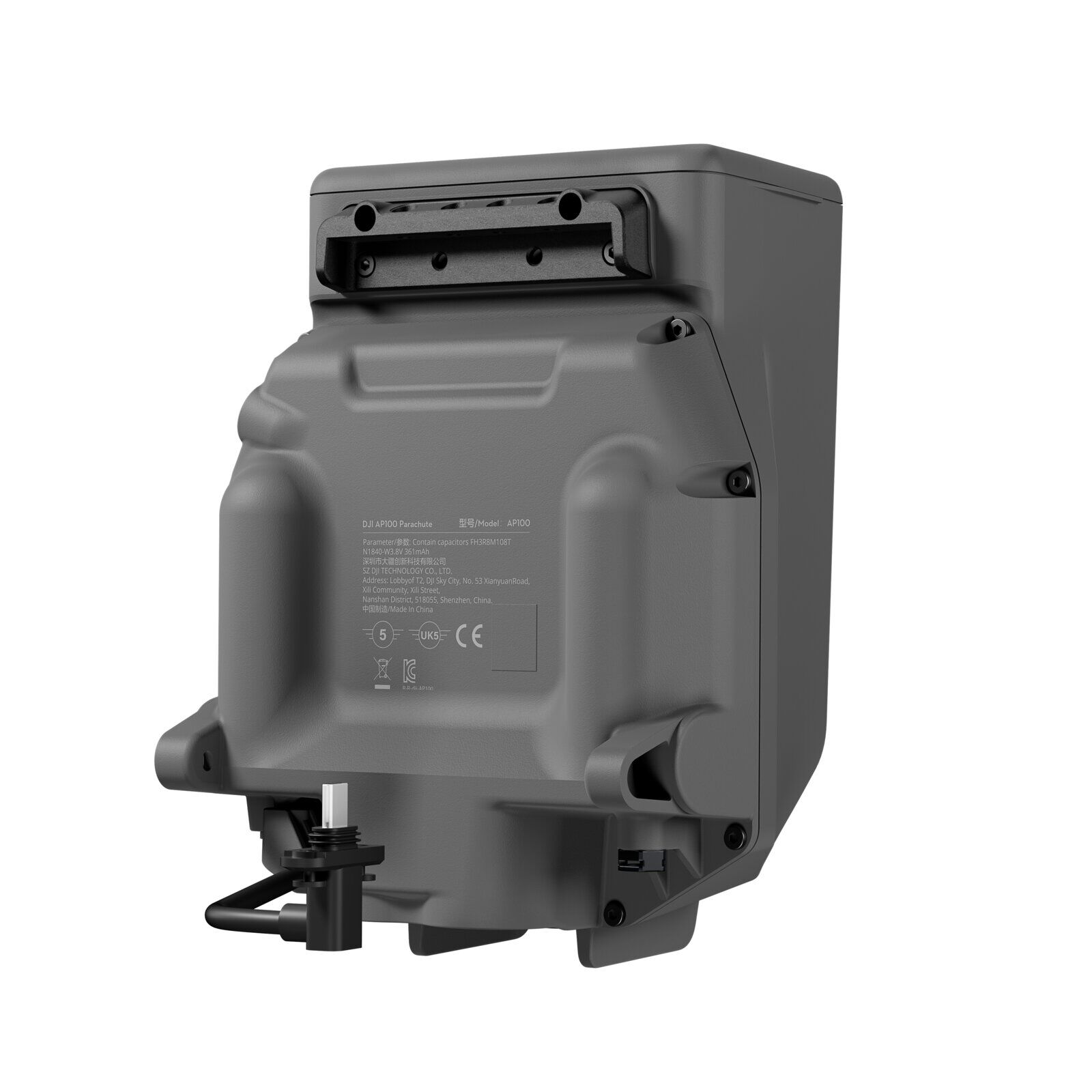
For the priceless below. The DJI AP100 Parachute for the DJI Matrice 400 meets C5 class requirements and is part of the C6 recertification offered by DJI: automatic deployment in under 600 ms, stabilized descent below 5 m/s, independent power and full-link redundancy. IP55, 935 g, fits the original carrying case.
Available to order: ask us for the current delivery time.
Available to order: contact us for lead time.
Available to order: request a quote or call +32 67 88 37 37 for the current delivery time.
Protecting what is priceless on the ground
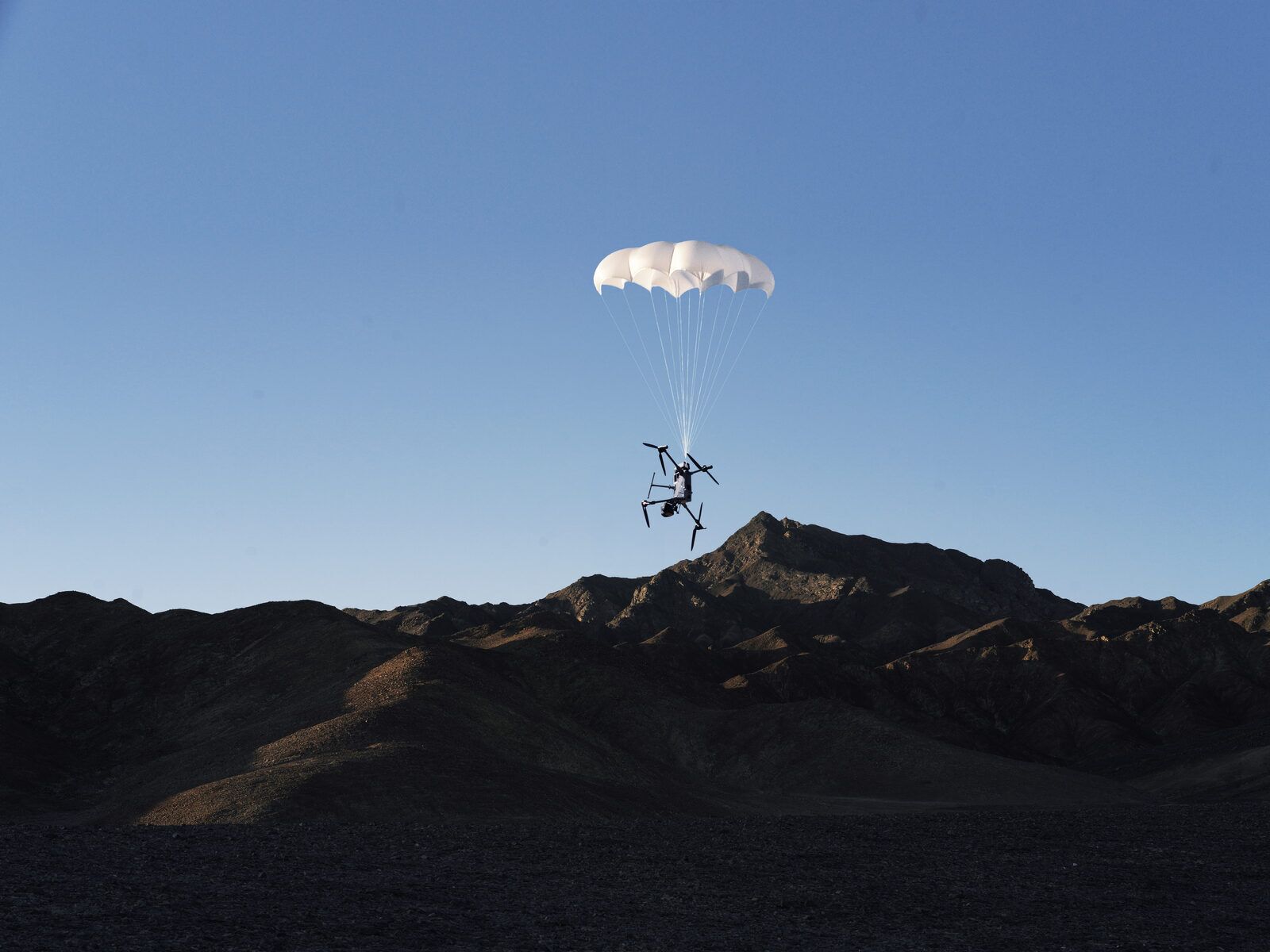
The DJI AP100 is the first DJI Enterprise safety parachute designed for the DJI Matrice 400. In an emergency (loss of control, motor failure, leaving the authorised area), it deploys automatically or manually and slows the aircraft’s descent to reduce potential damage to the drone, its payload, and people and property on the ground. With a response time under 600 ms and a stabilised descent speed below 5 m/s, it turns a critical incident into a controlled landing.

C5 and C6 classes: what the AP100 changes for your operations
This is what really matters about the AP100: it allows you to meet a hardware condition of the European standard scenarios over populated areas.
- C5: mounted on a Matrice 400, the AP100 meets the safety requirements of class C5 (EU), applicable to standard scenario STS-01: visual line of sight (VLOS) flight over a controlled ground area, including in populated environments.
- C6: the factory-certified Matrice 400 (C6) Worry-Free Plus Combo, or a Matrice 400 recertified by DJI, carries the C6 label, applicable to standard scenario STS-02 (beyond visual line of sight, BVLOS). The class is a condition: access to the scenario also depends on the operator’s declaration, the remote pilot’s STS certificate and the operations manual, and STS-02 requires a controlled ground area in a sparsely populated environment.
- Declared compliance with MOC 2511 / MOC 2512 (EU validation of the FTS and of ground risk reduction) and F3322 certification (performance standard for drone parachute systems).
For Belgian, Luxembourg and Dutch operators, this means significantly stronger authorisation applications to the DGTA and the competent authorities.


Already own a C3-certified Matrice 400? Upgrade to C6 (EU)
DJI offers a certification upgrade programme: owners of a C3-certified M400 send their aircraft and the AP100 parachute to DJI After-Sales, which performs a hardware inspection, firmware update, applies the C3+C6 label and attaches the compliance statement. Estimated turnaround: 1 to 2 weeks, mostly logistics. For any Matrice 400 purchased from Drone Parts Center, we take care of this upgrade for you.
How deployment works
The system follows a four-step sequence:
- Detection: continuous monitoring of attitude (IMU), motor speed and supply voltage.
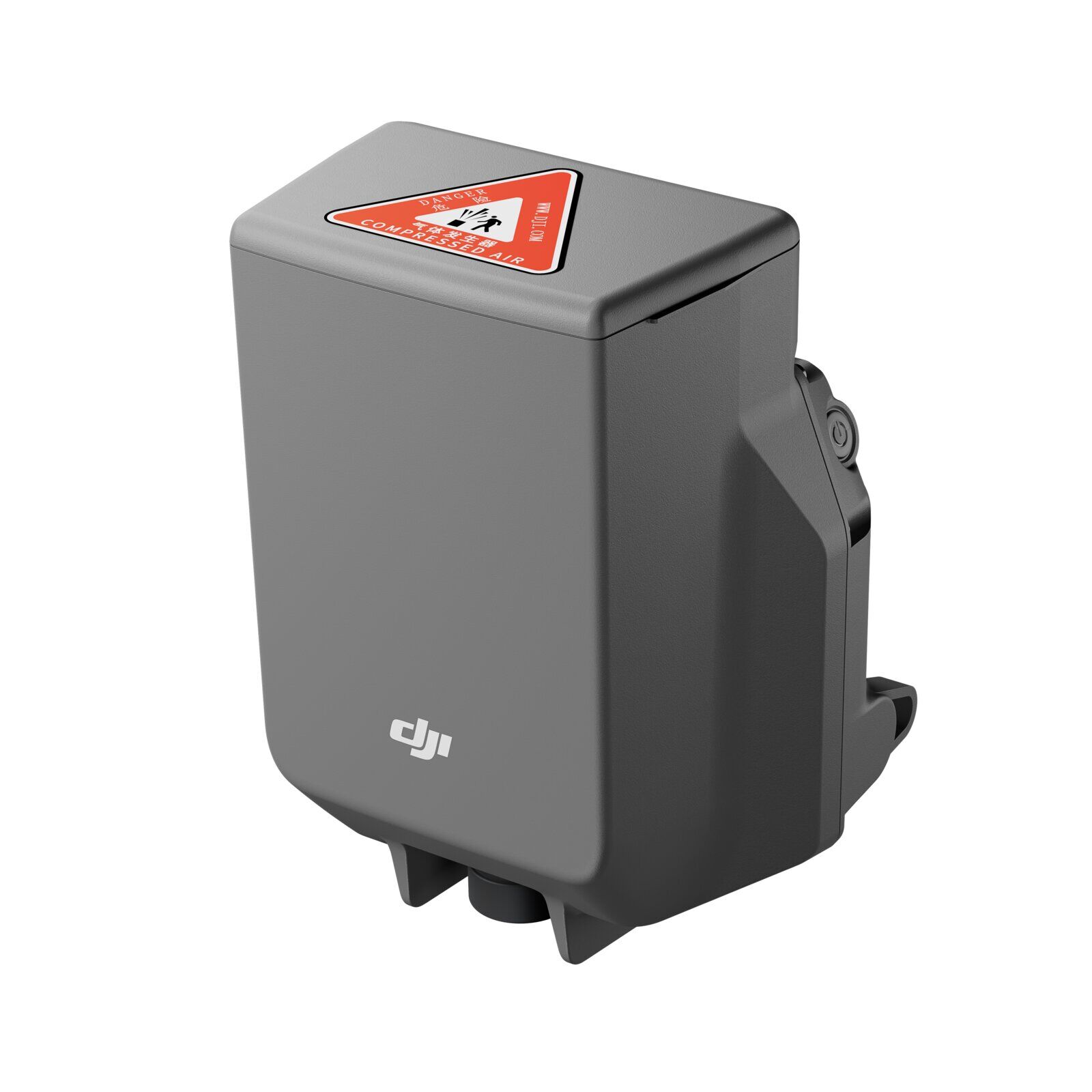
- Ejection: the motors stop, then a gas generator (a pyrotechnic system, comparable to a car airbag) instantly produces high-pressure gas that opens the hatch and ejects the parachute, tensioning the lines in a fraction of a second.
- Deceleration: the nylon canopy deploys and inflates; its large surface slows the fall to under 5 m/s.
- Landing and recovery: the aircraft descends suspended beneath the canopy, stabilised. Audible and visual alarms (about 1 hour) alert ground personnel and help locate the aircraft.


Three deployment modes
- Automatic: anomaly detection through sensor fusion (attitude, speed); geocaging-triggered deployment (EU, UK and EEA) when leaving the defined operational volume. Disabled within 10 m of the takeoff point and below 15 m relative altitude.
- Manual: from the remote controller, by tapping the parachute icon in DJI Pilot 2 and then sliding to confirm.
- Remote via FlightHub 2 (EU, UK and EEA): FTS activation from a web interface. Requires the DJI Cellular Dongle 2 with a SIM card and a cellular connection.
Independent safety redundancy
- Independent power: built-in dual capacitor that powers the processor, sensors and ejector even if the drone’s main battery is cut off (backup power for about 1 hour).
- Independent detection: the parachute’s own sensors, not entirely dependent on the main flight controller.
- Independent execution: the FTS sends its commands directly to the ESCs over a dedicated circuit.
- Independent link: dedicated 4G channel for remote activation, independent of the standard radio link.
- Continuous self-diagnostics: from power-on to the end of the flight, the AP100 monitors the gas generator and connections; any anomaly is reported in real time via the HMS in DJI Pilot 2.
Built for the field, without compromise
- IP55 rating, matching the Matrice 400, for operating in the rain; -20 to 50 °C and up to 4,500 m altitude.
- Only 935 g; the maximum takeoff weight remains 15.8 kg.
- Fixed rear mounting: does not interfere with batteries or payloads. The Matrice 400 fits directly into its original case with the parachute mounted: no removal between missions.
- Impact on flight time: about 6 minutes.
Professional use cases
Patrol and urban security
Traffic management, event security and emergency command over streets, squares and populated areas. The AP100 reduces the risk to people and property in the event of an irreversible failure. Typical setup: M400 + AP100 + H30T + spotlight + speaker.
Urban mapping
High-precision 3D modelling of buildings, roads and infrastructure in built-up areas. A certified parachute system demonstrates a high level of redundancy to the authorities and strengthens authorisation applications in complex areas, while making full use of the M400’s flight time and payloads (L3, L2, P1).
High-rise facade inspection
During operations close to curtain walls, the parachute is part of the safety chain and reduces damage to the building and the ground in the event of an accident. A key argument for obtaining work permits and reassuring building owners and regulators.
Drone delivery
Medical transport (samples, blood, AEDs), document delivery, last mile in remote areas. The parachute establishes an end-to-end safety chain and supports flight authorisation applications.
In the box
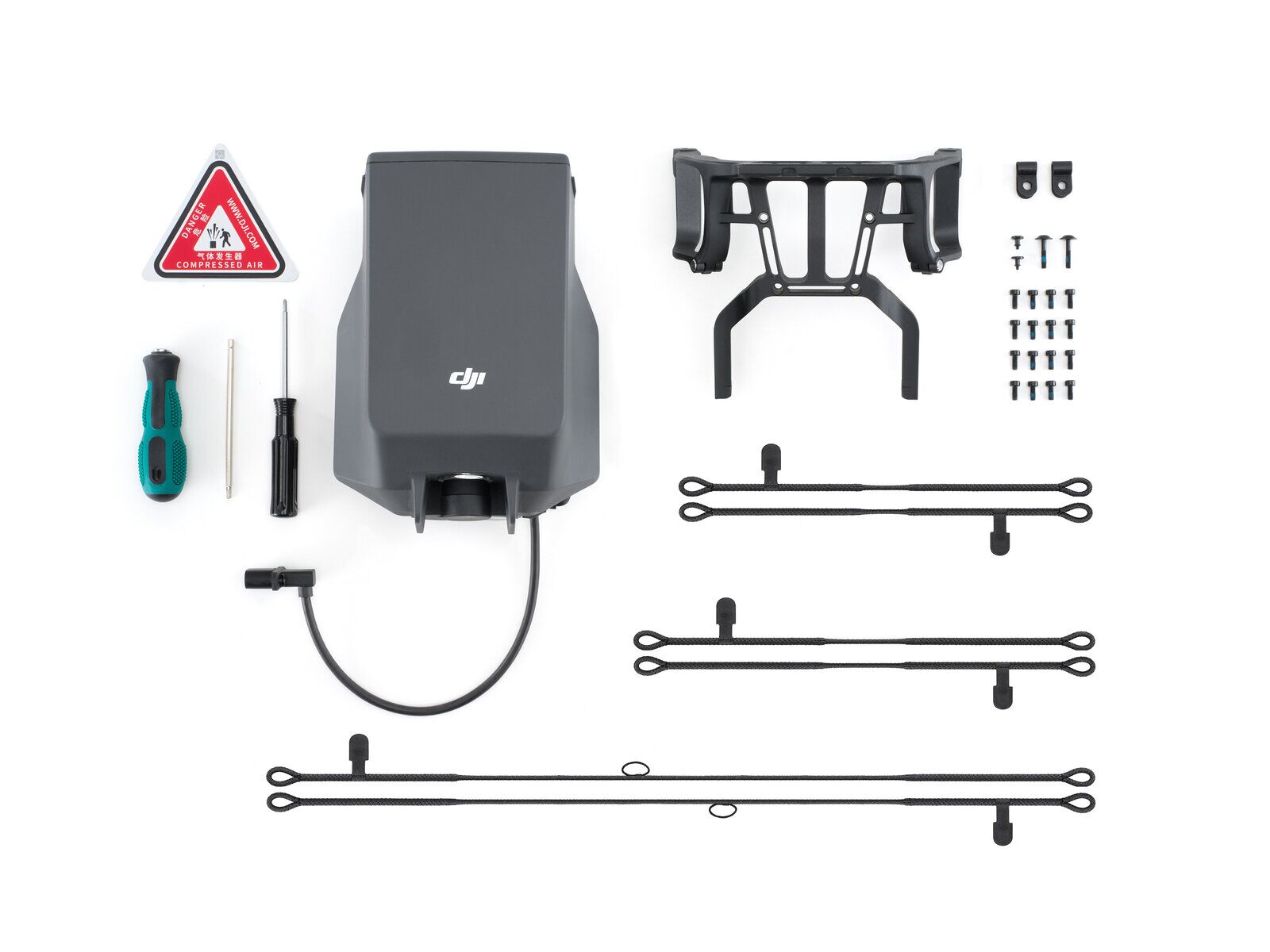
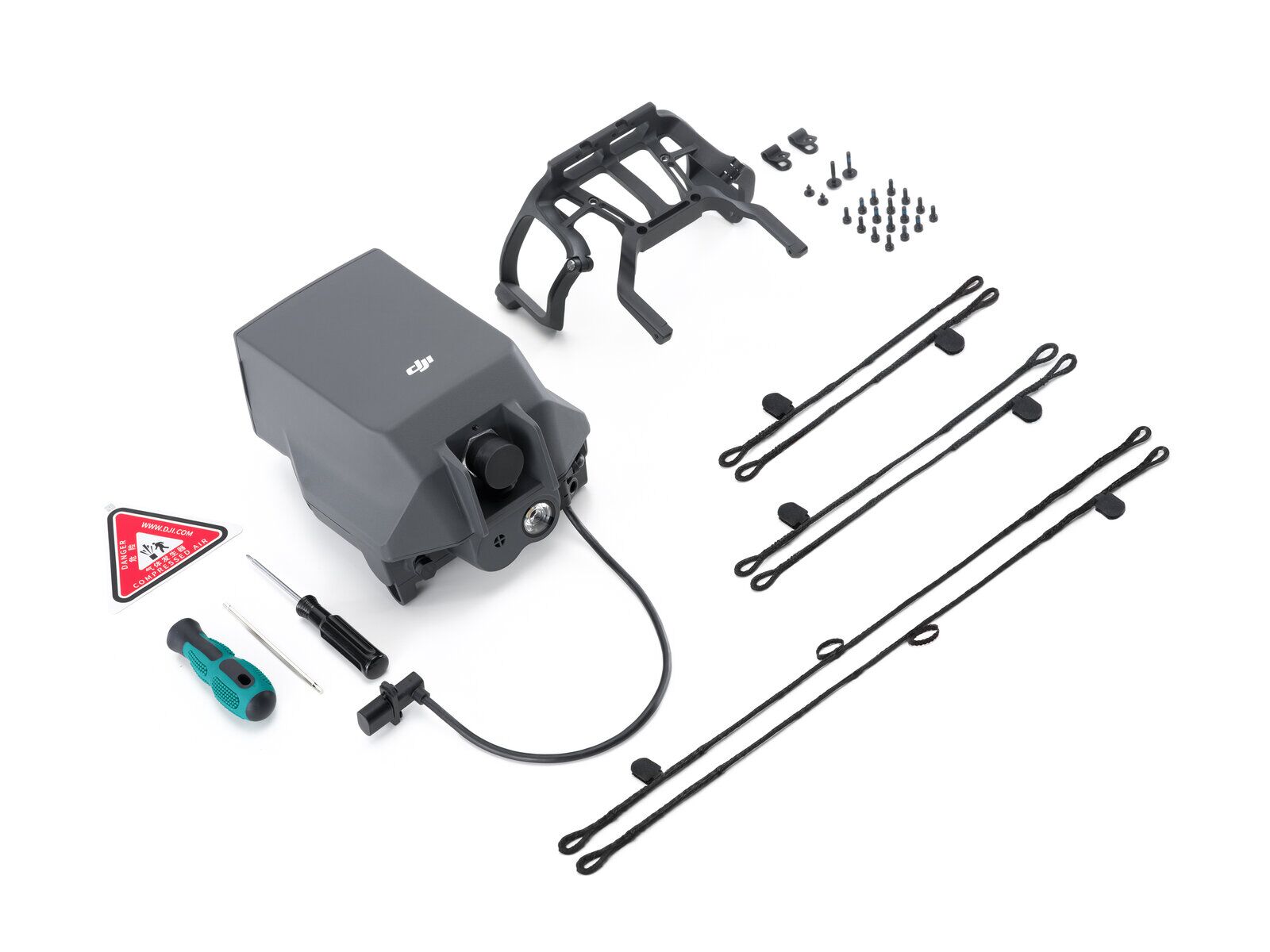
- DJI AP100 parachute (x1)
- Mounting bracket (x1) and 16 screws (including 4 spares) + screwdriver and handle
- E-Port cable clamps (x2, including 1 spare) + screws (x2)
- E-Port screwdriver + spare screws (x2)
- Gimbal safety lanyards (x3)
- Documentation and user warning sticker

Installation in four steps
- Attach the mounting bracket to the rear of the aircraft (drone powered off) and tighten the M3 screws.
- Attach the parachute to the bracket and tighten the screws.
- Connect the cable to the E-Port V2 port (E4), leaving some slack, and secure it with the clamp so it does not obstruct the sensors.
- Install the gimbal safety lanyards (mandatory), apply the warning sticker, then power on and activate the accessory in DJI Pilot 2 (internet connection required, drone and remote controller firmware up to date).
Specifications
| Compatibility | DJI Matrice 400 only (downward and rear mmWave radars disabled once the parachute is mounted) |
| Classes | C5 (mounted on a Matrice 400); C6 (Worry-Free Plus Combo or DJI recertification) |
| Compliance / certification | MOC 2511 / MOC 2512; F3322 |
| Weight | approx. 935 g (with bracket) |
| Dimensions | 182 x 171 x 157 mm (L x W x H, with bracket) |
| Max takeoff weight | 15.8 kg |
| Impact on flight time | approx. 6 minutes |
| Stabilised descent speed | 5 m/s max. |
| Effective deployment altitude | 30 m minimum |
| Response time (automatic) | 600 ms max. |
| Canopy | nylon |
| Manual deployment | DJI Pilot 2; FTS via FlightHub 2 (EU, UK, EEA) |
| Automatic deployment | attitude or speed anomaly, or geocaging boundary exit (EU, UK, EEA) |
| Alarms | audible and visual, approx. 1 h, can be turned off with the physical button |
| Backup power | approx. 1 h (dual capacitor, independent of the drone) |
| Protection rating | IP55 |
| Operating temperature | -20 to 50 °C |
| Operating altitude | 0 to 4,500 m |
| Service life | single use, replace after any deployment; replacement recommended 3 years after activation |

Good to know
Once the AP100 is mounted, the Matrice 400 automatically disables its downward and rear-facing millimetre-wave radars: detection of small obstacles in these directions is reduced. The parachute is a supplementary safety device and does not replace good flight safety management practices. If it has not been deployed, inspect it every 3 to 6 months (housing, cable, bracket screws, lanyard).
Data measured by DJI in a controlled laboratory environment; actual experience may vary. Some features (FTS, geocaging, web activation) are limited to the EU, the UK and the EEA and require the appropriate hardware. Fleet configuration and compliance: Drone Parts Center, authorised DJI Enterprise dealer in Nivelles, supports you across the Benelux. Request a quote.
Frequently asked questions
Which drone is the AP100 parachute compatible with?
The DJI AP100 is designed for the DJI Matrice 400 only. Once installed, the Matrice 400 automatically disables its rear and downward mmWave radars to ensure unobstructed deployment: stay aware of the flight environment and manually avoid obstacles in these directions.
How does the AP100 help me meet C5 and C6 requirements?
Mounted on an existing Matrice 400, the AP100 meets the safety requirements of class C5 (STS-01 scenario). The C6 label (STS-02 scenario) cannot be obtained by fitting a parachute yourself: it comes from the manufacturer, with the factory-certified Matrice 400 (C6) Worry-Free Plus Combo or through DJI’s recertification programme for an existing Matrice 400. The class remains one condition among others for access to the scenario.
Does fitting the AP100 guarantee absolute safety?
No. The AP100 is a supplementary safety device designed to reduce descent speed in an emergency. It mitigates, but does not eliminate, the risk of damage to the aircraft, the payload, or people and property on the ground.
What is the descent speed after deployment?
5 m/s maximum, for deployment at an altitude of at least 30 m.
What triggers automatic deployment?
An abnormal attitude or speed detected by the sensors, or crossing a geocaging boundary defined in DJI Pilot 2. Automatic deployment is disabled within 10 m of the takeoff point and below 15 m relative altitude.
Can the parachute deploy on the ground?
No. As long as the aircraft has not taken off, the parachute will not deploy, either automatically or manually.
What is the impact on flight time?
About 6 minutes less flight time.
When should the parachute be replaced?
It is a single-use device: it must be replaced after any deployment, and the aircraft inspected before flying again. Replacement is also recommended 3 years after activation, even if the self-diagnostics report nothing.
Is the gimbal safety lanyard mandatory?
Yes. With the parachute, it must be attached to the gimbal connector: it helps prevent the payload from detaching under the opening shock.
| Weight | 0,935 kg |
|---|
Only logged in customers who have purchased this product may leave a review.
Complétez votre équipement
Related products
Available to order: contact us for lead time.
Available to order: contact us for lead time.
DJI Matrice
Available to order: contact us for lead time.
Available to order: contact us for lead time.
Parachutes
Available to order: contact us for lead time.
Discontinued
6 in stock
Discontinued
3 in stock
Reviews
There are no reviews yet.