


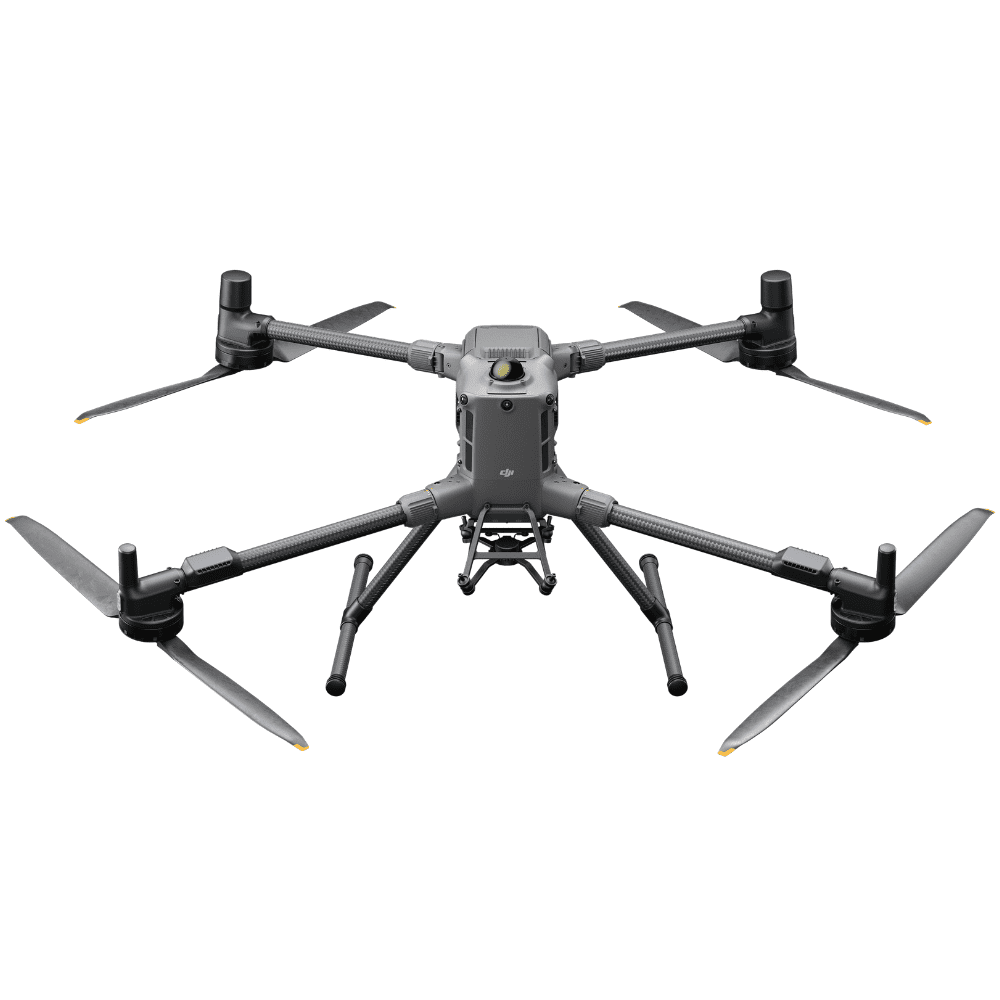
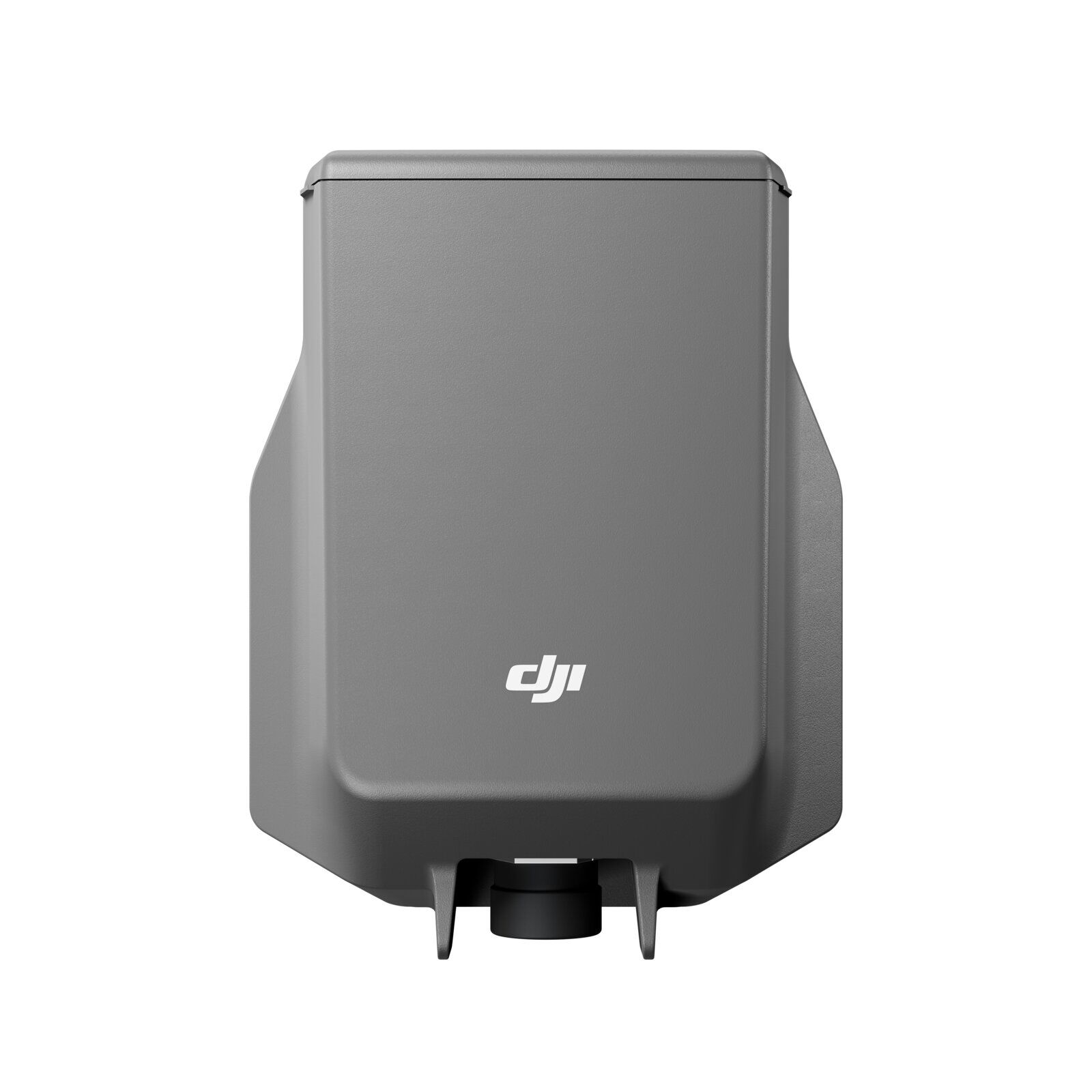
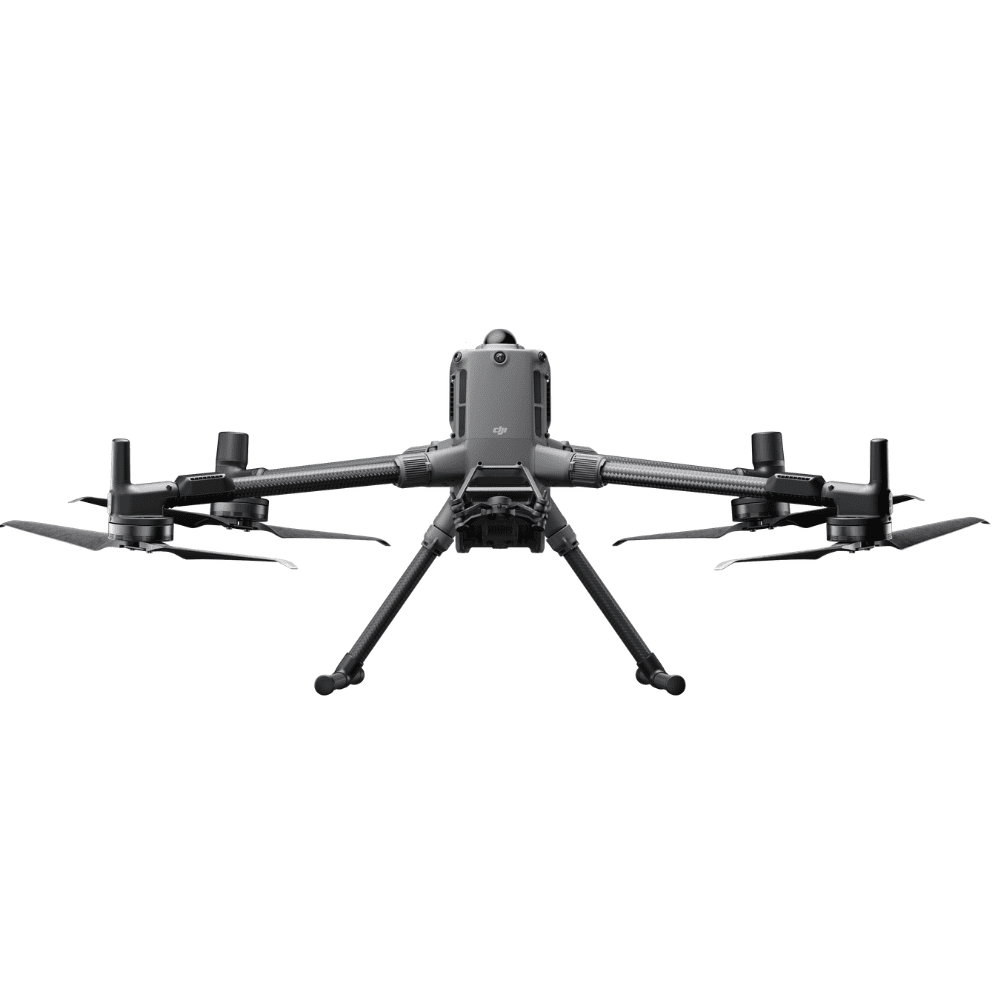
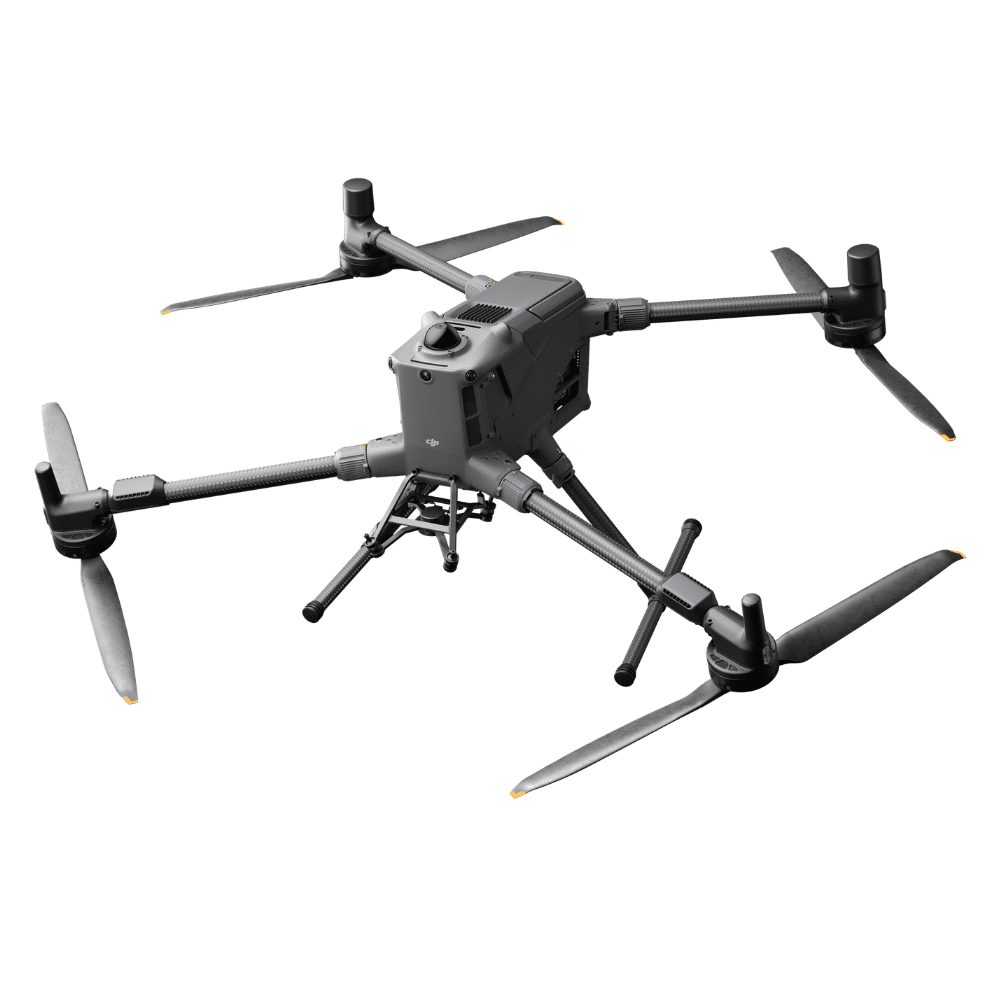
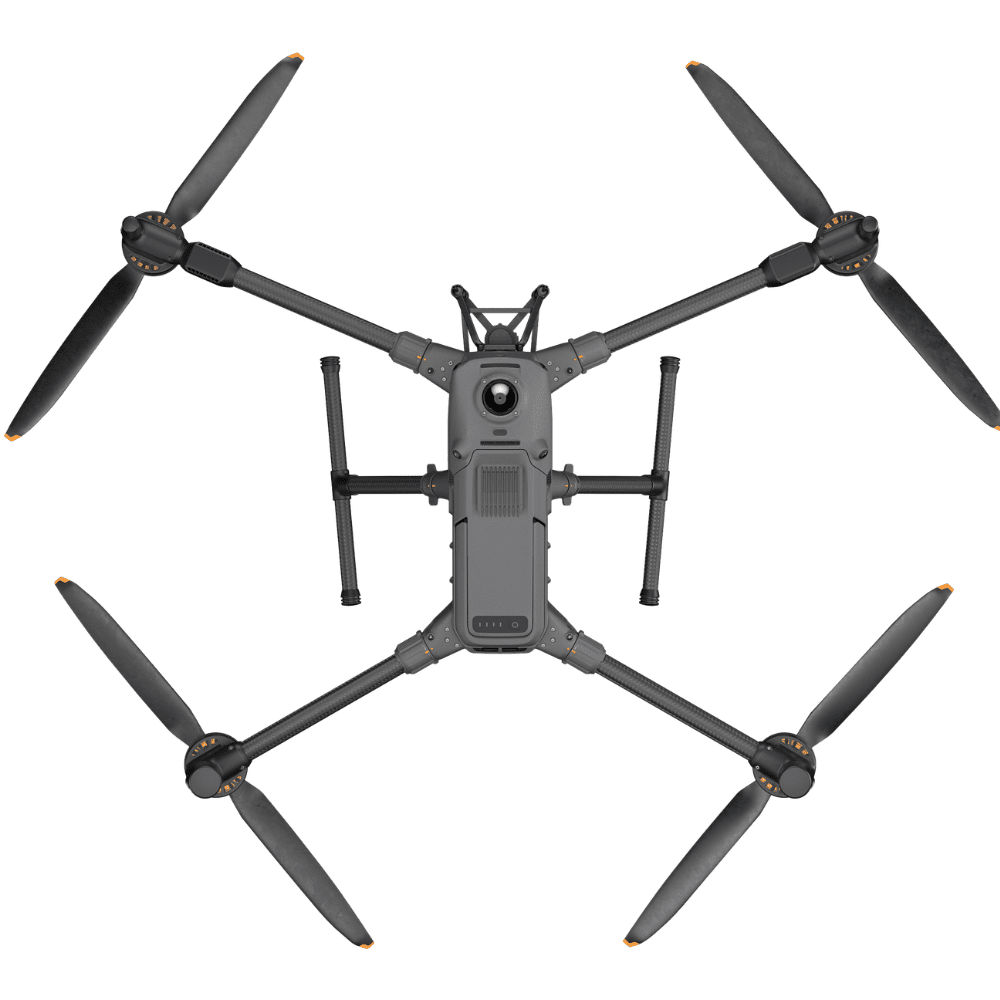
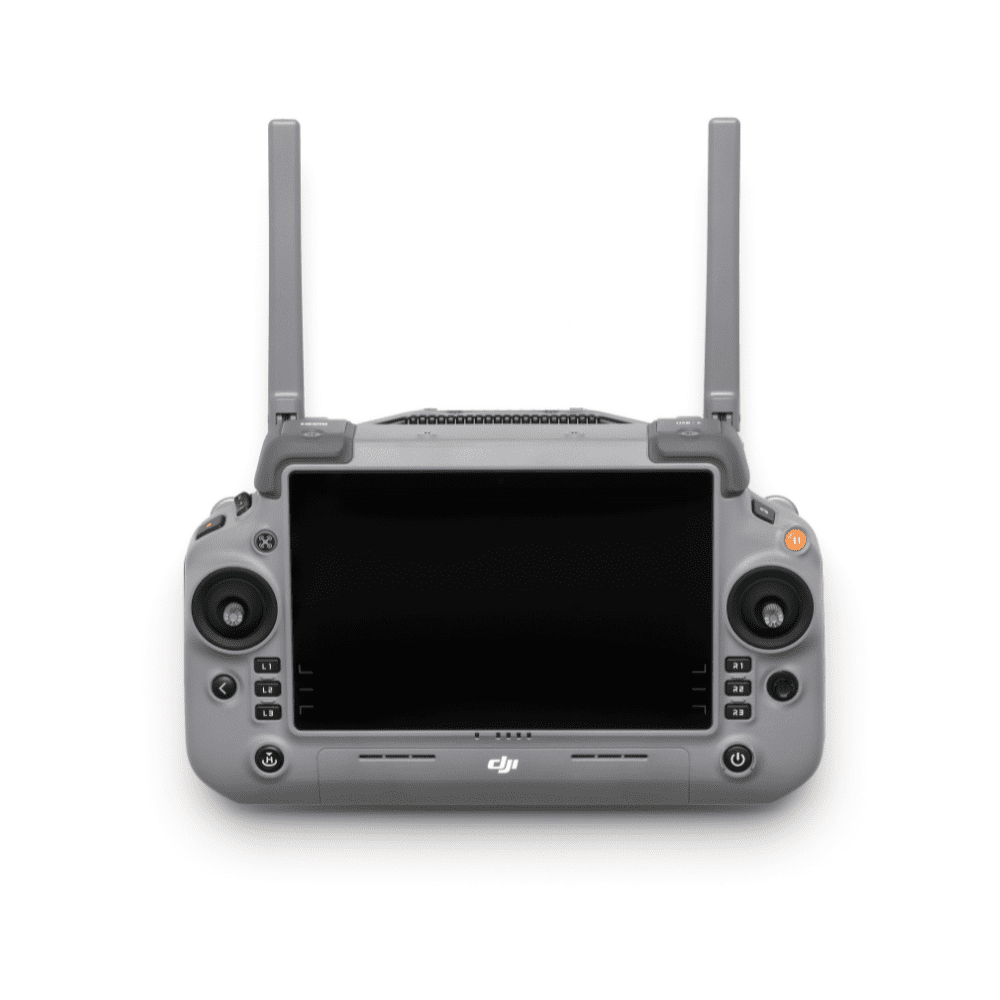

DJI Matrice 400 (C6) Worry-Free Plus Combo – AP100 Parachute
€ 10.757,35

Available to order: ask us for the current delivery time. The Matrice 400 (C6) Worry-Free Plus Combo pairs, factory-certified together, a class C6 Matrice 400 and the integrated AP100 parachute: access to the STS-02 scenario. Sold without TB100 batteries or a BS100 charging station.
Available to order: contact us for lead time.
The combo in short
The Matrice 400 (C6) Worry-Free Plus Combo is a DJI Matrice 400 assembled and labelled at the factory with its AP100 parachute, carrying class C6. The C6 label can only come from the manufacturer: unlike C5, Regulation (EU) 2019/945 provides no conversion kit to class C6.
The three Matrice 400 configurations, and what each one unlocks
| Configuration | Class | Standard scenario | How to obtain it |
|---|---|---|---|
| Matrice 400, bare | C3 | Open category, subcategory A3 | Standard configuration |
| Matrice 400 + AP100 fitted by the operator | C5 | STS-01, visual line of sight | Regulation 2019/945, Part 16: conversion kit provided |
| Matrice 400 (C6) Worry-Free Plus Combo | C6 | STS-02, beyond visual line of sight | Factory combo, or DJI recertification programme on an existing M400 |
Class C6 is a condition, not an authorization. Flying an STS-02 mission also requires an operator declaration, a remote pilot holding the matching certificate of competency, a current operations manual, and a controlled ground area in a sparsely populated environment. The Matrice 4D and the Matrice 4TD also provide access to STS-02 under class C6, in a very different mass category.
What’s in the box
The combo brings together the content of the Matrice 400 and that of the AP100 parachute, nothing else.
Not included: the TB100 flight batteries and the BS100 charging station, which also handles the recharging. Order them separately, based on the number of batteries and the simultaneous charging capacity you need.
What the parachute changes in flight
The AP100 continuously monitors the aircraft’s attitude, motor rotation speed and power voltage. When it detects an anomaly, a pyrotechnic gas generator opens the hatch and ejects the canopy; descent stabilises below 5 m/s. Response time in automatic mode is under 600 ms. Minimum deployment altitude is 30 m.
Three trigger modes: automatic, through sensor fusion and geofencing when the aircraft leaves the operational volume; manual, from the remote controller in DJI Pilot 2; and remote, via FlightHub 2 with a DJI Cellular Dongle 2 and a SIM card.
Four redundancies independent of the drone: dual-capacitor power that lasts about one hour after the main battery is cut, sensors dedicated to the parachute, commands sent directly to the ESCs via a dedicated circuit, and a separate 4G channel for manual triggering.
After deployment, audible and visual alarms run for about one hour to warn ground personnel and help locate the aircraft.
Real-world flight time of the combo
The Matrice 400 is rated for 59 minutes of flight time. This figure is measured with an H30T gimbal fitted, for a total weight of 10,670 g, flying forward at 10 m/s, no wind, at sea level, battery from 100% to 0%. Hovering under the same conditions: 53 minutes.
The parachute costs about 6 minutes of flight time. So expect roughly 53 minutes of forward flight with an H30T and the parachute fitted. Maximum take-off mass remains 15.8 kg, since the AP100 weighs only 935 g.
Already own a Matrice 400?
Two paths, depending on the class you need.
For class C5 and STS-01, buying the AP100 alone and fitting it is enough. Installation takes four steps: mount the bracket on the rear of the aircraft while it is switched off, attach the parachute, connect the cable to the E-Port V2 port and secure it with its clip, and fit the gimbal safety tether, which is mandatory.
For class C6 and STS-02, DJI offers a recertification programme: the aircraft and the parachute are sent to DJI After-Sales, which inspects them, updates the firmware, applies the C3+C6 label and issues the declaration of conformity. Allow 1 to 2 weeks, mostly logistics. For any Matrice 400 purchased from Drone Parts Center, we take care of this upgrade for you.
Specifications
| Feature | Value |
|---|---|
| Combo CE class | C6 (factory labelling) |
| Parachute compliance | MOC 2511 and MOC 2512; F3322 certification |
| Maximum take-off mass | 15.8 kg |
| Aircraft weight | 5,020 g without batteries; 9,740 g with batteries |
| Parachute weight | 935 g |
| Payload | up to 6 kg (at the third gimbal connector, at sea level) |
| Simultaneous payloads | up to 7, via 4 external E-Port V2 ports |
| Flight time | 59 min forward flight, 53 min hovering, with H30T; about 6 min less with the parachute |
| Dimensions | unfolded 980 x 760 x 480 mm; folded 490 x 490 x 480 mm |
| Transmission | O4 Enterprise, 20 km (CE/SRRC/MIC), 40 km (FCC) |
| Maximum speed | 25 m/s (at sea level, no wind) |
| Climb and descent speed | 10 m/s climb, 8 m/s descent |
| Wind resistance | 12 m/s at take-off and landing |
| Service altitude | 7,000 m |
| Ingress protection | IP55 (aircraft and parachute) |
| Temperature range | -20 °C to +50 °C |
| Parachute response time | under 600 ms in automatic mode |
| Descent speed under canopy | under 5 m/s |
| Minimum deployment altitude | 30 m |
| Parachute service life | single use; replacement 3 years after activation |
| DJI reference | CP.EN.00000667.01 |
Frequently asked questions
Does the combo come with batteries?
No. Neither TB100 batteries nor a BS100 charging station. Order them separately.
Can I get class C6 by buying the AP100 separately?
No. Part 17 of Regulation 2019/945 provides no conversion kit to C6. The label can only come from the manufacturer, either through the factory combo or through the DJI recertification programme.
Do the drone and payload survive deployment?
Not necessarily. The parachute reduces damage to people and property on the ground. It does not guarantee that the aircraft and its gimbal remain usable after impact.
Can the parachute trigger on the ground?
No. Until the aircraft has taken off, neither automatic nor manual deployment is possible.
When does the parachute need replacing?
After any deployment, since it is single-use. And as a precaution, three years after activation, even if the self-diagnostics report no fault.
What is the delivery time?
The combo is available to order: ask us for the current delivery time. If your timeline does not allow for that, fitting the AP100 to an available Matrice 400 gives you class C5 and STS-01 sooner.
Good to know
Once the AP100 is fitted, the Matrice 400 automatically disables its rear-facing and downward-facing millimetre-wave radars: detection of small obstacles in those two directions is reduced. The gimbal safety tether becomes mandatory; it keeps the payload from detaching under the shock of the canopy opening. The parachute adds to flight safety management, it does not replace it.
Values measured in a controlled environment; real-world use may vary. The FTS, geofencing and web-based triggering are reserved for the EU and require the corresponding hardware and subscription.
Fleet configuration and compliance: Drone Parts Center, Authorized Dealer for DJI Enterprise in Nivelles, supports you across Belgium, Luxembourg and the Netherlands.
Have a question about this product?
Complétez votre équipement
Related products
Building and infrastructure inspection
DJI Matrice 4T Drone – Thermal and Photovoltaic Inspection Pack
In stock
Building and infrastructure inspection
DJI Matrice 4E Drone – Special Package for Measuring and Inspecting Roofs
In stock