
 Français
 Nederlands
 Deutsch
News, Regulation & Certification
Understanding the Differences Between Drone Laws in the United States and Europe
04
Jan
Jan
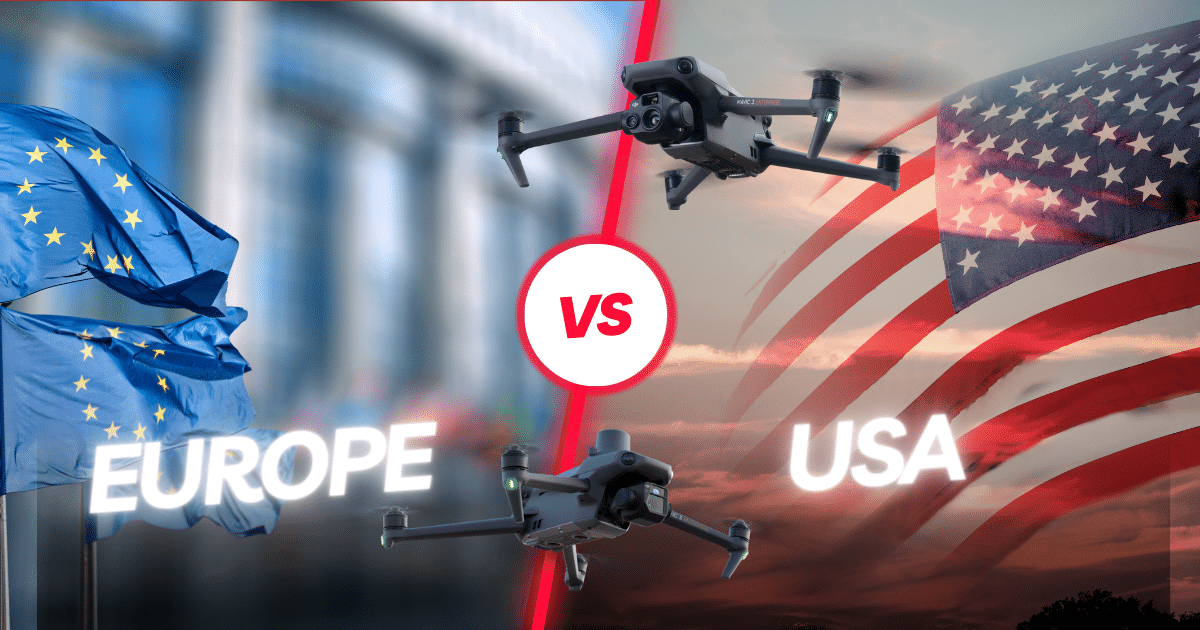
With the growing popularity of drones, it has become essential to understand the regulations surrounding their use. This article takes a detailed look at the differences between US and European drone laws, with a focus on the concept of Remote ID, a key technology for aviation security management.
1. Remote ID: a crucial identification system
- In the United States: The Federal Aviation Administration (FAA) has strict requirements in place for drones. Remote ID is mandatory for all drones weighing more than 250 grams. It allows real-time transmission of information such as the drone’s identification, position and altitude. More information can be found on the FAA website.
- In Europe: The European Union Aviation Safety Agency (EASA) follows a similar approach but with some particularities. For example, drones in the C0 category, which are often very light, are not subject to the same requirements as higher categories. For more details, visit the EASA website.
2. Weight and Categories of Drones: Varying Requirements
- In the United States: All drones weighing more than 250 grams must be registered with the FAA and compliant with Remote ID. This regulation aims to improve the traceability and accountability of drone operators.
- In Europe: Drones are divided into several categories (C0 to C4) based on their weight and capabilities. Each category has its own rules, especially when it comes to registration and Remote ID. An explanatory table of the different categories can be found here.
3. What European Pilots Need to Know
- Geovigilance and Direct Identification: In Europe, some drones must be equipped with geovigilance and direct identification systems, especially in VLLs (Very Low-Level) areas. This requirement is intended to improve safety in densely populated airspace.
- The Specific Category and the European STS01: European legislation has introduced significant changes, in particular with the European STS01 which replaces the old Belgian regulations. Pilots must undergo specific training and obtain certifications to operate in this category.
4. Practical Implications of Remote ID for Drivers
- Drone operators need to understand in detail how Remote ID influences their day-to-day operations. Complying with Remote ID requirements is crucial to ensure the safety and legality of drone flights.
A thorough understanding of drone laws is a must to ensure safety and legal compliance. It is essential for pilots to stay informed of the latest regulatory developments.